Emergency Lighting & Power
Emergency Lighting & Power
In any building, reliable emergency lighting and power systems are critical to ensuring occupant safety during power outages, fires, or other emergency situations. Properly designed emergency lighting guides occupants to safety and maintains essential life-support systems when the main power fails. At Break Engineering, we specialize in comprehensive emergency lighting and power system design tailored to meet rigorous Canadian safety standards, giving you peace of mind that your building is protected and compliant.
Break Engineering is a Winnipeg, Manitoba-based electrical engineering consultancy providing emergency lighting and backup power system design for commercial, industrial, and institutional facilities across Manitoba, Ontario, Alberta, and Saskatchewan. Our professional engineers are registered with EGM, PEO, APEGA, and APEGS and design emergency power systems that comply with the National Building Code of Canada and the Canadian Electrical Code.
Emergency Lighting System Design & Planning
Our expert engineers design emergency and exit lighting systems in strict accordance with the National Building Code of Canada (NBC) and the Canadian Electrical Code (CEC). Whether your building requires battery-backed LED fixtures for local egress lighting or centralized inverter systems to power multiple zones, we create customized solutions that ensure safe and efficient evacuation routes. We carefully evaluate your facility's layout, occupancy type, and emergency egress requirements to deliver lighting designs that maximize visibility, minimize energy use, and guarantee code compliance.
Emergency Power & Backup Solutions
Critical life-safety systems depend on uninterrupted power during emergencies. We provide comprehensive sizing and specification services for generators, automatic transfer switches (ATS), uninterruptible power supply (UPS) and battery systems, as well as centralized power inverters. Our solutions are engineered to support vital loads including exit illumination, fire alarm systems, emergency communications, smoke control equipment, elevators, and fire pumps. By integrating robust backup power systems, we help ensure continuous operation of these critical systems, mitigating risks and enhancing building resilience.
Why Choose Us for Your Emergency Lighting & Power Needs?
- ▶ Code Expertise & Compliance: Our team has deep knowledge of the NBC and CEC requirements, ensuring every design meets or exceeds regulatory standards.
- ▶ Tailored Solutions: We don't believe in one-size-fits-all; each project receives a custom approach based on building specifics, usage patterns, and risk factors.
- ▶ Integrated Design Approach: Emergency lighting and power systems are designed in harmony with your overall electrical infrastructure for optimal performance and cost-efficiency.
- ▶ Life Safety Focus: Safety is our top priority. Our designs not only comply with codes but are optimized to provide reliable guidance and power during emergencies.
- ▶ Experienced Team: With years of experience across diverse building types, we bring practical insights and proven solutions to every project.
- ▶ End-to-End Support: From initial planning and design through to installation guidance and commissioning, we are your trusted partner throughout the project lifecycle.
Contact us today to discuss your emergency lighting and power requirements.
Frequently Asked Questions
When is emergency lighting required in Winnipeg buildings?
The National Building Code of Canada and the Canadian Electrical Code require emergency and exit lighting in all buildings subject to Part 3 occupancy requirements, including commercial, industrial, and institutional buildings in Winnipeg and across Manitoba. Emergency lighting must illuminate means of egress to a prescribed lux level for a minimum duration and must activate automatically upon loss of normal power.
What is the difference between exit signs and emergency lighting?
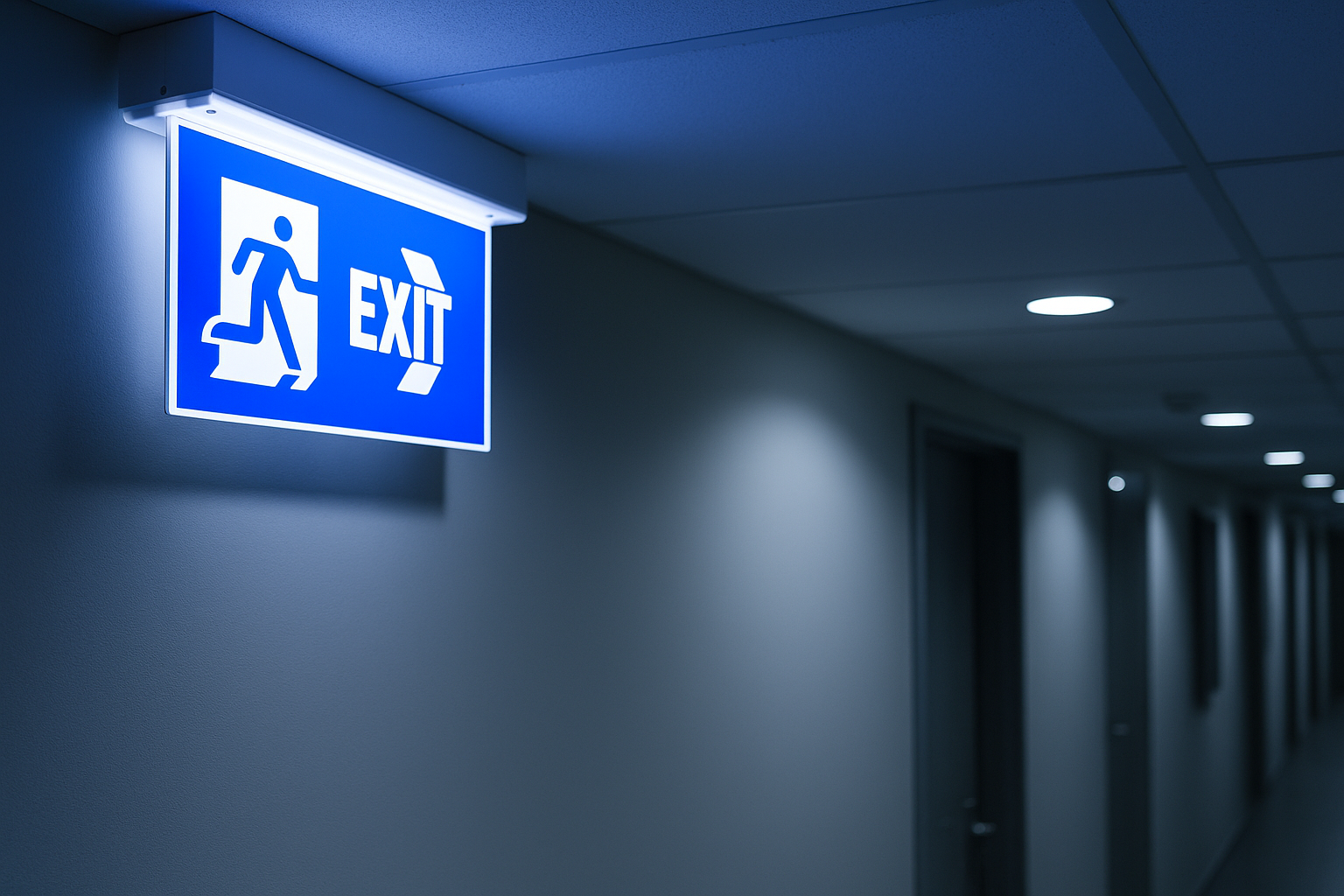
Exit signs mark the location of exits and must be continuously illuminated. Emergency lighting illuminates the means of egress - corridors, stairwells, and exit discharge paths - to a prescribed lux level during a power failure. Both are required by the NBC and CEC; Break Engineering designs both as part of a coordinated life safety lighting system.
What types of emergency power systems does Break Engineering design?
Break Engineering designs battery-backed emergency lighting fixtures, centralized battery inverter systems, automatic transfer switches (ATS) for generator connections, UPS systems, and generator sizing and specification. All designs comply with the Canadian Electrical Code and National Building Code requirements for emergency power sources and transfer times.
Can emergency lighting be integrated with a fire alarm system?
Yes. Emergency lighting systems are typically interfaced with the fire alarm system so that alarm activation triggers appropriate emergency lighting responses. Break Engineering coordinates fire alarm and emergency lighting designs together to ensure proper sequencing, and can also serve as the Integrated Testing Coordinator for facilities requiring CAN/ULC-S1001 integrated system testing.